
The Missing Voices in Chiropractic
A response to “How Chiropractors Became the Backbone of MAHA."
It feels like Chiropractic is having a moment, but not necessarily in a good way. It’s hard to tell when you live in “the chiropractic bubble,” the invisible barrier that keeps chiropractors safe in the company of seemingly like-minded individuals. We were warned, as we sprily sat through class after class to become Doctors of Chiropractic, that once we graduated… the bubble would pop.
At the beginning of my chiropractic career in 2018, the “pop” wasn’t too jarring.
As someone who was completely unfamiliar with chiropractic before a university recruiter introduced me to it, I was prepared for most people not to understand. Though the bubble had popped, my landing was padded with more curiosity than doubt and fear.
Then came the COVID-19 pandemic.
As panic surged across the nation over the enigmatic nature of the virus, chiropractors were among the chosen few deemed “essential workers.” Politically, COVID-19 intensified a growing divide between parties over the virus’s threat level, masking, and vaccines. “Vaxxer” and “anti-vaxxer” became labels used to identify people, and deciphering misinformation from fact became journalists’ new pastime.
Millions of quarantined Americans took to their screens as a reprieve from the monotony of being indoors, with social media quickly becoming a favorite outlet for connection, information, and answers. Anxious people scoured the internet for credible information in a climate where trust in institutions was bleak.
And it just so happened that chiropractors had something to say.
Based on social media algorithms, chiropractors who shared their opinions about COVID-19 were often grouped with anti-vaxxers. Some saw the virus as a marketing opportunity, making claims that adjustments could boost immunity in a way that protected against COVID-19. Some others downplayed the severity of the pandemic, campaigned against masks, and positioned chiropractic as an alternative to medical care in a situation that didn’t appear appropriate. Those were the chiropractors that went viral. That’s what people know about chiropractors.
It’s this faction of chiropractors that current Secretary of Health and Human Services and MAHA movement leader, Robert F. Kennedy Jr., refers to as “my kind of people.”
But as a chiropractor, they don’t represent me.
How Chiropractors Became the Backbone of MAHA
Recently, I came across a December 2025 Politico Magazine article titled “How Chiropractors Became the Backbone of MAHA,” by Catherine Kim. Though she later makes the distinction that not all chiropractors support the MAHA movement or its messaging, she still generalizes that “most chiropractors…seem eager to align with MAHA.” The use of the word “most” enraged me more than I care to admit. It felt like a mistaken identity being assigned to me, one that misrepresented the chiropractor I am.
As a Black chiropractor, we are not practicing in the same reality as many of our colleagues. I know this dichotomy does not only exist in the chiropractic profession as many black professionals express they feel like live in a different world than the majority of their colleagues. With chiropractic however, the added unfamiliarity and unconventional nature thickens the division line. Many black chiropractors enter the profession with little previous knowledge or experience of profession they seek to join.
Before deciding I wanted to be a chiropractor, I didn’t have any real exposure to it. I had no frame of reference of what chiropractors actually did. I’m not sure I even related chiropractic to the spine, or to back pain. Prior to attending chiropractic school, I had never even been adjusted. What brought me to chiropractic was a quiet inkling that the chiropractic message was truth. My introduction to chiropractic felt like I was being introduced to my destiny. My heart raced, my breath quickened as I realized I had found “it,” the thing I was supposed to do with my life.
Chiropractic told me the body was self-organizing and that made sense to me. No one gives your body an instruction manual on how to develop from a single egg and sperm. Chiropractic said the body was self-healing which made sense to me. When you get a cut, your body has the ability to heal without direction. Chiropractic said the body was self-maintaining and that made sense to me. You don’t tell your body when to start puberty or grow grey hair. You don’t teach it to adapt to its environment, to shiver when it’s cold or sweat when it’s hot. It knows what to do… when it’s functioning perfectly.
Chiropractic also taught me that most times the body is not working perfectly. There are things that interrupt our body’s flow of intelligence and, to put it rather simply, removing those things helps the body work better. That was it. That’s what made me a chiropractor.
In school, I discovered there were a spectrum of chiropractors. Not all of them practiced the same, used the same techniques, or had the same specialties or training. We came from all sorts of backgrounds, though the majority was white. In my class of 221, there were 11 Black students, each with a similar chiropractic origin story as mine… we had no idea what we were getting into.
My first year was spent dismissing several technique electives as “woo-woo” because they were so far outside my normal paradigm of health. Though I felt called to the profession, I wasn’t ready to open that Pandora’s box.
Culturally, some of what I witnessed in chiropractic school I would have simply called “white people stuff.” I pushed it away, because it didn’t feel like it was for me. I had no frame of reference for it. Even the language, talking about innate intelligence, felt somewhat blasphemous coming from my background. Chiropractic philosophy groups, at times, appeared to “worship” the founders in ways that felt cultish.
For a while, I kept my distance, only focusing on the parts of chiropractic that felt logical. I knew I was meant for this profession, but I didn’t yet understand how I fit into this version of it. But over time, some pieces of it began to click. My understanding of innate intelligence grew. But that initial disconnect stayed with me.
And some of it, if I’m being honest, still felt like white people stuff.
When chiropractic began to align itself with the MAHA movement, it didn’t feel unfamiliar. It felt like an extension of the same cultural lens I had already been navigating, a conversation I didn’t see myself in.
During COVID, while several of my white colleagues were throwing caution to the wind, doing only what was minimally required by the Centers for Disease Control and Prevention, many of my Black counterparts were preparing for the worst. At the time, I was a part-time associate chiropractor for a white chiropractor in a high volume style practice. Though I was grateful to be employed and helping people avoid overcrowded emergency rooms, masks were optional. Precautions were minimal. And the urgency that I felt wasn’t shared.
In major contrast, one of my mentors, a Black chiropractor on the other side of town had papered their entire office and practiced in what looked like a hazmat suit. And whether we agreed or not about the vaccine, most Black chiropractors didn’t speak on it publicly. Many of us were as equally afraid of the virus as our patients. We knew that Covid disproportionately impacted us… our patients, our families and friends. We couldn’t afford to not be cautious.
This is why the Politico article’s generalization of chiropractors as broadly aligned with MAHA is flawed. The author takes a visible subset of chiropractors and presents it as the whole, ignoring the reality that this profession is far more diverse in thought, in practice, and in lived experience, than that narrative allows.
Even the voices she presents as for the counter-narrative, those chiropractors opposed to MAHA, are white men who have also built large followings by using similar tactics as the chiropractors they oppose, just from the opposite side of the argument.
It’s easy to fall into clout trap because, at its core, aligning with or against MAHA has become a kind of social barometer, one that determines whether you’re seen as a “good” person, whether your business or services are worthy of being utilized, and whether you are considered credible. Either perception can take hold, depending on which side of the fence you fall on.
What’s noticeably absent from the article is a clear representation of the middle. Not the chiropractors making extreme claims. Not the chiropractors building platforms by tearing chiropractic down. If you only pay attention to those who the algorithm deems influential, you’ll miss the ones in between. The ones who practice within scope, take a balanced, evidence-informed approach, and passionately do this work. Those chiropractors are rarely acknowledged, but never centered. And when the middle isn’t visible, the extremes start to look like the whole. This creates a very specific framing around chiropractic. One side is ideological, alternative, and MAHA-aligned. The other is made up of debunkers and critics. But there are many of us in the middle who aren’t being seen or represented.
Following the publication of the Politico article, a “historic” meeting took place between chiropractic leadership and the MAHA movement in Washington, D.C., in March 2026. It brought together major chiropractic organizations such as the American Chiropractic Association (ACA), International Chiropractors Association (ICA), ChiroCongress, and others to discuss the future of chiropractic’s role in healthcare and to position the profession more centrally within national health policy conversations.
Notably missing from that conversation, however, was the American Black Chiropractic Association (ABCA), the only nationally recognized organization representing Black chiropractors. I’m not sure whether they were invited or chose not to attend, but beyond that, there appeared to be no Black representation in the room, based on photos circulating from the “momentous” occasion.

Chiropractic leadership meeting with MAHA representatives, Washington, D.C., March 2026. Photo source: Dynamic Chiropractic.
That absence echoes the concerns raised by Summer Lee when she sharply questioned Robert F. Kennedy Jr. during a House Committee on Education and Workforce hearing titled “Examining the Policies and Priorities of the Department of Health and Human Services.” She highlighted the devastating reality that Black women are at least three times more likely to die from pregnancy-related causes than white women—despite the fact that the vast majority of those deaths are preventable.
During the hearing, Lee asked:
“How are we going to solve the Black maternal mortality crisis if we cannot say ‘Black’?”
And it raises a similar question here:
How are we making America healthy again if it doesn’t include those most disparaged? How are we positioning chiropractic as central to healthcare while failing to represent those who need it most?
What has become clear is that this is bigger than how one article views chiropractic.
It’s about how chiropractic is being defined and who gets to define it. When representation is limited, perception becomes distorted.
Right now, the public is only being allowed to see through one window of a large house. And that limited view shapes everything: how people perceive us, how other healthcare providers engage with us, and how we see ourselves reflected back.
This is why I created ChiroJunky.
Because when I looked around the profession, social media, leadership, I didn’t see myself reflected. Black patients didn’t see themselves represented. It’s the reason Dr. Bobby Westbrooks founded the ABCA in 1981:
“While chiropractic struggled for its existence as a profession, Black people had to struggle for membership in a profession founded on the back of a Black man.”
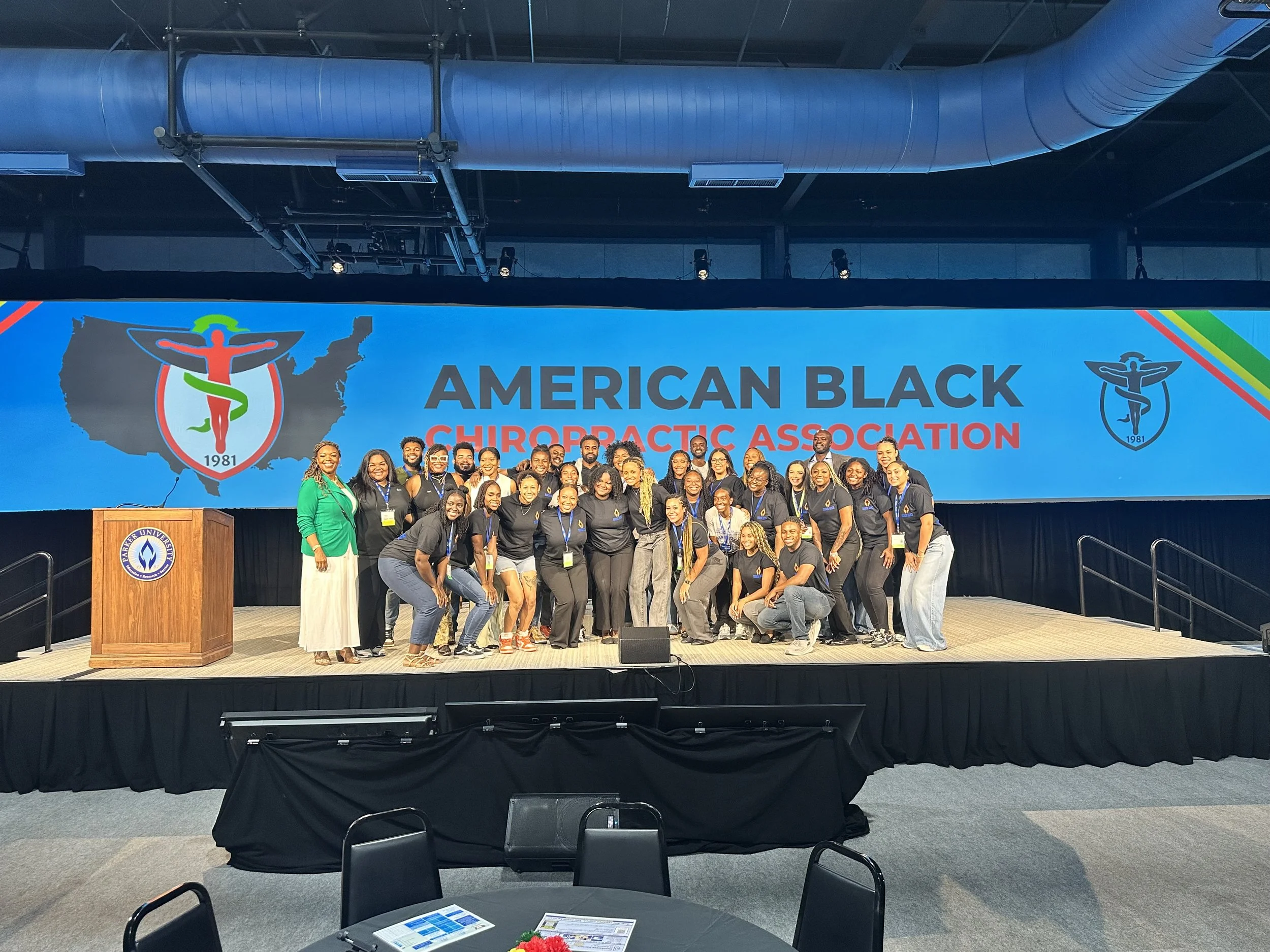
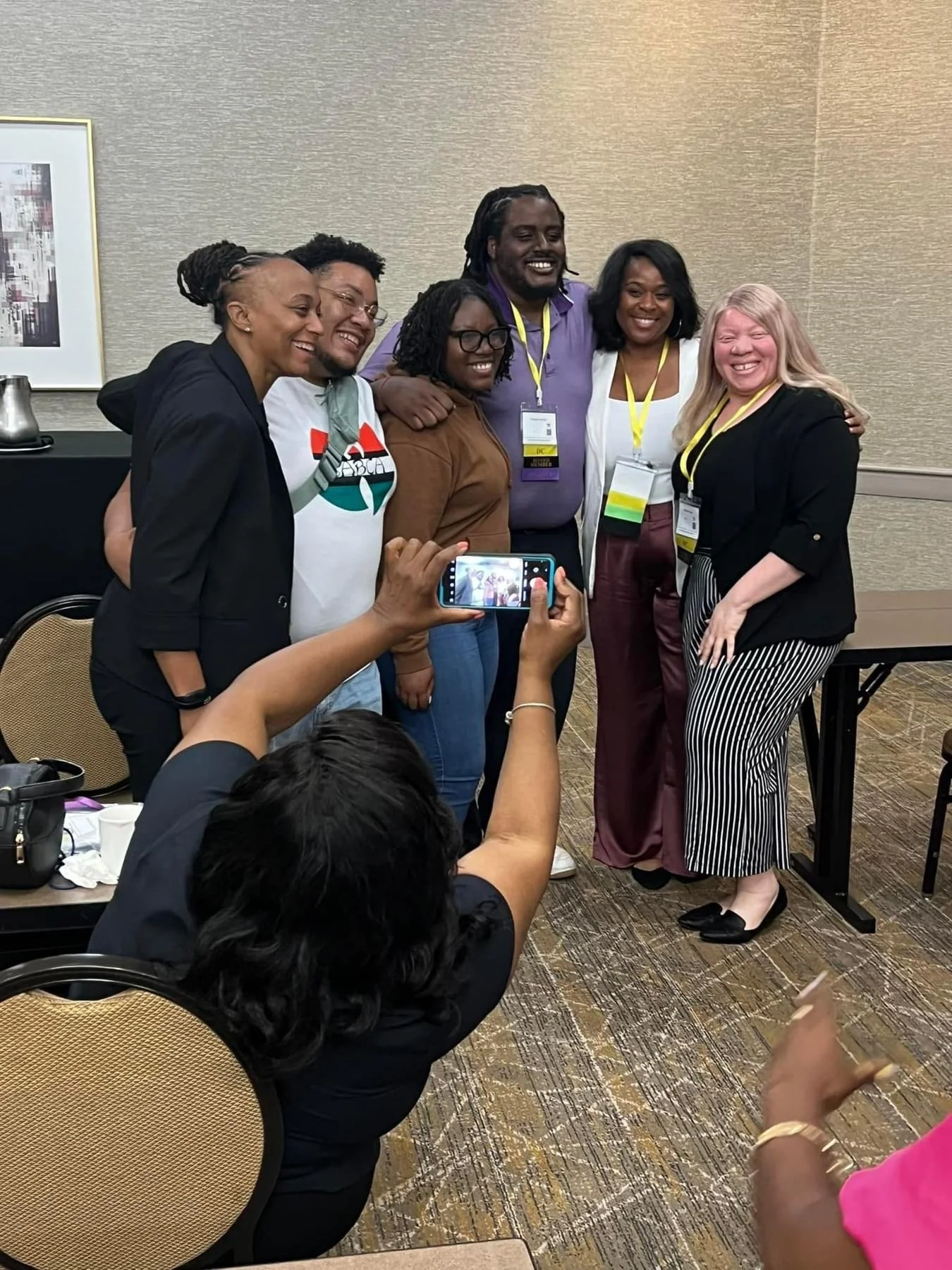
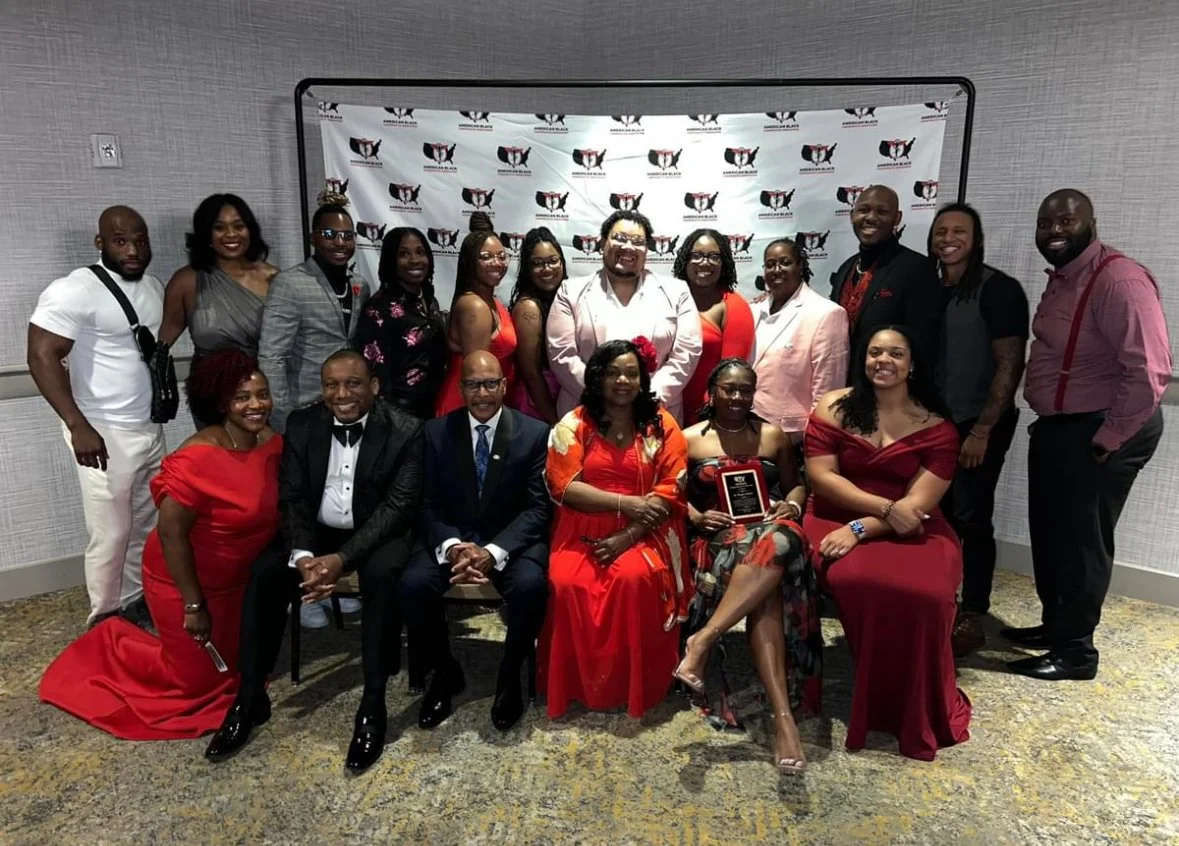
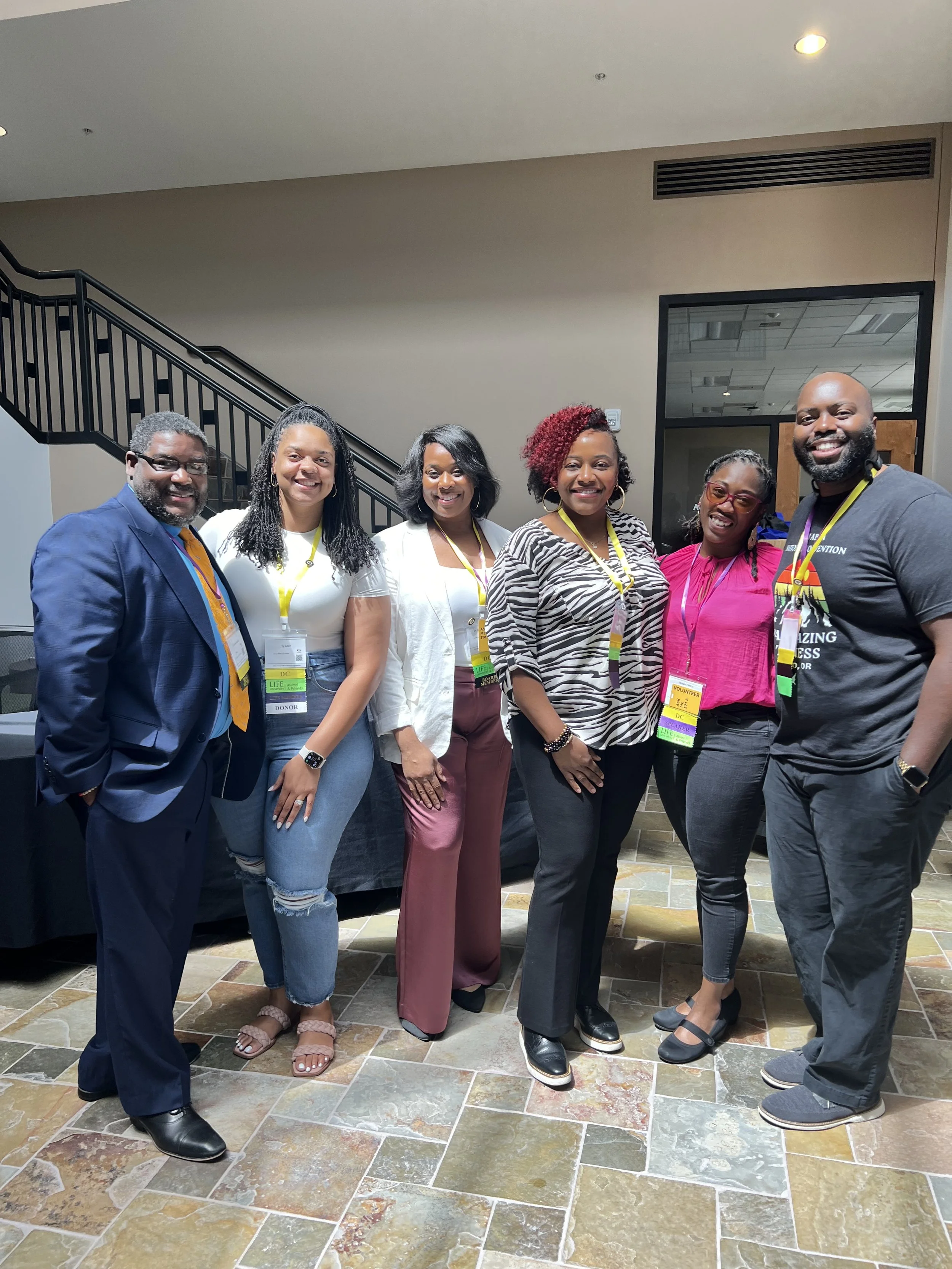
Black chiropractors within the American Black Chiropractic Association, spaces where the voices often missing from the profession are centered.
Today I would reiterate:
“While chiropractic continues to fight for validity and recognition as a healthcare profession, Black chiropractors are still fighting for representation and inclusion within it, a profession founded on the back of a Black man, with roots that trace back to bonesetters.”
ChiroJunky exists to make chiropractic visible, accessible, and culturally relevant in the Black community; to transform the health of our culture, reshape public perception, expand access to care, and represent the voices that have been missing from the conversation.
For far too long, the profession has been shaped by a narrow group of voices, predominantly white men, to the point where I’ve heard it said that chiropractic is not ready for a Black woman leader. And that stayed with me.
That’s why I’m hopeful about something different:
The expansion of chiropractic into public colleges.
Expanding access means expanding who gets to enter the profession and ultimately, who gets to lead it. Because if chiropractic is going to evolve, it has to make space for the voices that have been missing.
