
Chiropractic, Bonesetting, and Black Community Care

What happens when healthcare stops treating community trust like a problem and starts treating it like part of the solution?
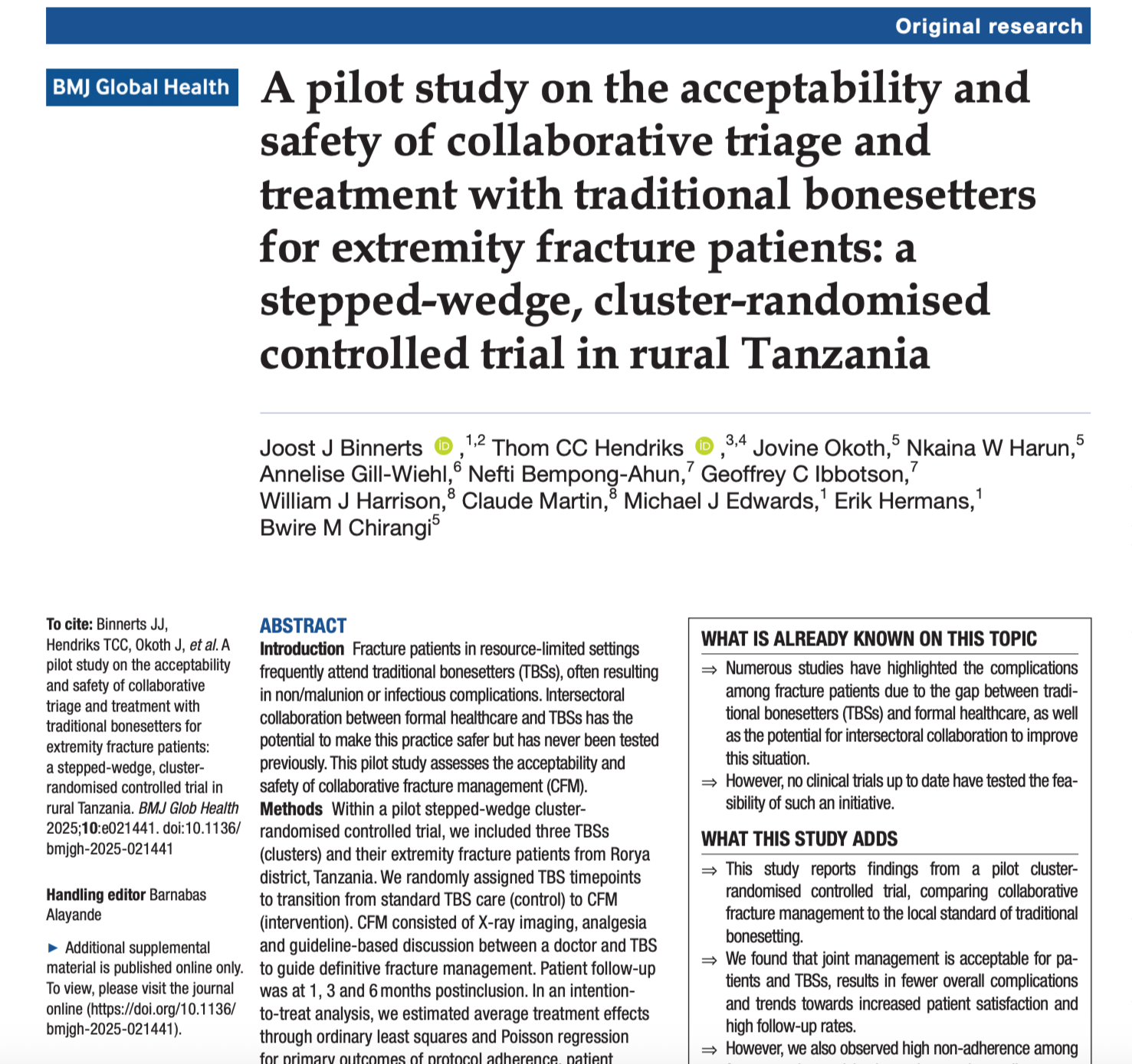
A recent Global Surgery Foundation article, “Better Together: Bonesetter-Surgeon Collaboration Improves Trauma Outcomes,” highlighted a pilot study in Tanzania where traditional bonesetters and formal medical providers worked together to create a safer pathway for fracture care. Instead of dismissing bonesetters, ignoring their influence, or pretending patients would stop using them, the project built a collaborative model around the reality of who people already trusted,
The Tanzania pilot study involved 52 fracture patients in a rural setting. Of those patients, 21 received collaborative care and 31 received standard bonesetter care. The collaborative model brought traditional bonesetters and hospital staff into a structured system that used X-rays, pain management, shared decision-making, and defined treatment pathways. The pilot found fewer complications in the collaborative group, positive trends in patient satisfaction, and 66.7% protocol adherence.
The full BMJ Global Health study explains that collaborative fracture management included X-ray imaging, analgesia, and guideline-based discussion between a doctor and traditional bonesetter to help guide definitive fracture management. It also noted that many patients in resource-limited settings seek traditional bonesetters first because of access, cost, trust, geography, and tradition.
If traditional bonesetters can be brought into safe collaboration with hospitals, surgeons, X-rays, treatment pathways, and medical decision-making, why is chiropractic treated like it does not belong in the conversation?
The history of chiropractic includes roots in bonesetting, manual healing traditions, and community-based care, which is important because it shows that chiropractic was not simply a fringe idea sparked by a community séance or an isolated mystical moment. While the profession’s founding story around D.D. Palmer is often told with mythic, spiritual, and controversial elements, a broader historical view shows that chiropractic emerged from a much older ecosystem of hands-on healing.
One historical review explains that chiropractic synthesized several traditions, including bonesetting, magnetic healing, orthodox science, and popular health reform. In that mix, bonesetting provided the practical manual foundation: community-based healers using their hands to address pain, joint dysfunction, fractures, and what were historically described as “subluxations.” Palmer frequently referenced the bonesetter tradition, suggesting that early chiropractic was not created from nothing, but rather reframed and professionalized a form of manual care that communities had already relied on and trusted.
Why This Hits Different for Black Chiropractors
For Black chiropractors, this conversation carries another layer.
We often stand in a unique gap. We serve communities that have legitimate reasons to be cautious with healthcare systems, and we understand why people want providers who see them, hear them, respect their experiences, and do not dismiss their pain. At the same time, we practice in a profession that has had to fight for legitimacy, referral relationships, and respect from medicine… and within that same profession, Black chiropractors have too often been overlooked, underrepresented, or treated like an afterthought.
“While chiropractic struggled for its existence as a profession, black people had to struggle for membership in the profession founded on the back of a black man.”
That gives us a powerful perspective.
Manual healing is not foreign to us. Community-based care is not foreign to us. The idea that healing can happen through the hands, through relationship, through trust, and through proximity to the people has deep roots in many of our ancestral cultures. In that sense, there is something innate about this work… not just in the chiropractic philosophical sense, but in the cultural sense. Our communities have always had healers, helpers, birth workers, body workers, elders, and trusted people who stood in the gap when formal systems ignored us, harmed us, or failed to see us fully.
That is why Black chiropractors cannot afford to wait for permission.
Part of our responsibility is to teach our own communities why chiropractic is for us. Why it belongs in conversations about pain, mobility, prevention, pregnancy, pediatrics, wellness, and family health. But our responsibility does not stop there. We also have to educate healthcare systems, medical doctors, public health leaders, birth workers, therapists, and anyone else shaping the future of care.
That is why this bonesetter-surgeon collaboration feels so relevant.
Because if healthcare can recognize that traditional bonesetters are trusted enough to be part of a safer pathway for fracture care, then chiropractic should absolutely be part of broader conversations around musculoskeletal health, wellness, prevention, and community-centered care.
Especially Black chiropractors.
We do not need to be a footnote in this profession. We do not need to sit quietly while others decide whether chiropractic is legitimate enough, evidence-informed enough, or relevant enough to be included. Chiropractic has roots in manual care. Black communities have long histories of community-centered healing. That intersection is not something to minimize or hide from.
It is something to own.
Looking for a Black chiropractor near you?
ChiroJunky’s Black Chiropractors Near Me directory was created to help our communities find providers who understand the importance of representation, trust, and culturally connected care. Whether you are looking for support with pain, pregnancy, pediatrics, mobility, or family wellness, start by finding a chiropractor in your area.
