
5 Ways to Help (and Prevent) a Crick in Your Neck

You wake up, turn your head and there it is. It happens to nearly every one at some point in their life. That sharp, tight feeling in your neck that makes you feel like you suddenly lost half your range of motion.
People call it a crick in the neck. It can happen after sleeping in an awkward position, spending too much time looking down at a phone or computer, overworking the muscles around the neck, or simply moving the wrong way at the wrong time. But the good news? Many minor neck cricks are related to muscle tightness or spasm and improve with a little TLC.
Here are five things you can try….and a few ways to help keep that crick from coming back.
1. Sleep With Your Spine in a Neutral Position
The position of your spine when you sleep matters. Ideally, your head, neck and spine should stay relatively aligned while you sleep instead of your neck being tilted or rotated for hours at a time.
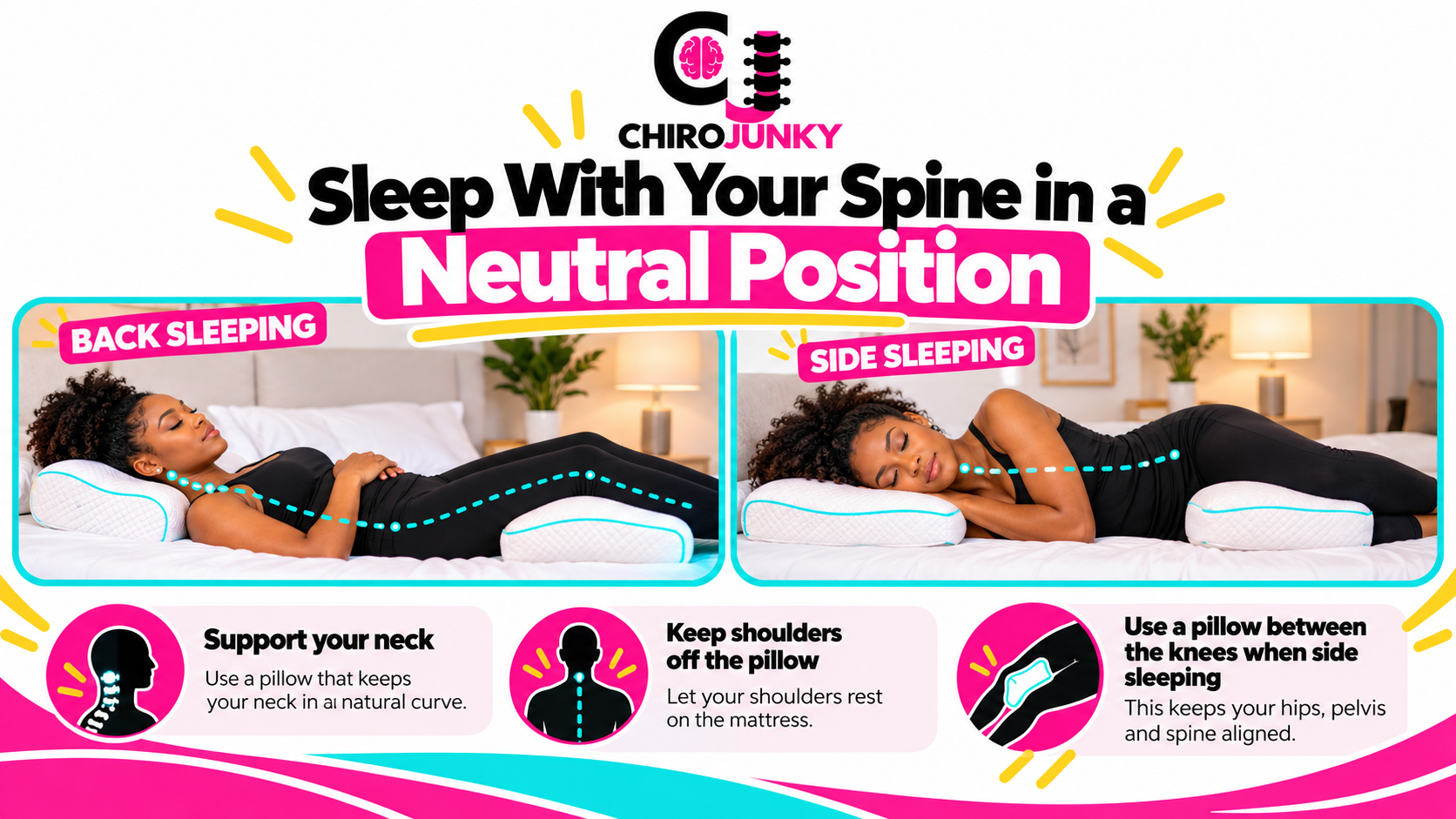
If you sleep on your back:
Use a pillow that supports the natural curve of your neck without pushing your head too far forward. Your pillow should support your neck and head… not your shoulders. Placing a pillow underneath your knees can also make back sleeping more comfortable.
If you sleep on your side:
Choose a pillow thick enough to fill the space between your shoulder and your head so your neck isn't dropping toward the mattress or being pushed upward. Keep the arm and shoulder touching the mattress in front of you instead of tucked underneath your head. A pillow between your knees can also help keep your hips and pelvis more level. For some people, a small pillow or towel underneath the waist can provide additional support.
2. Apply Heat to Tight Muscles
That “stuck” feeling in your neck is often accompanied by muscle tightness or spasm. One common muscle that may contribute is the sternocleidomastoid, or SCM, which runs from around the base of the skull down toward the sternum and collarbone.
Gentle heat can help tight muscles relax and may make movement more comfortable.
Try:
A heating pad on a low setting
A warm compress
A warm shower directed toward the tight muscles
A topical warming cream, when appropriate
Always place a barrier between a heating pad and your skin, and generally limit heat to about 15–20 minutes at a time. If the neck pain started immediately after an injury, swelling or inflammation may be present, and cold therapy may be more appropriate during the first day or two.
3. Gently Work on Tender or Tight Spots
Sometimes you'll notice one particular spot in a neck or shoulder muscle that feels significantly tighter or more tender than everything around it.
Gentle pressure may help. Instead of digging into the area, use your fingertips to apply light-to-moderate pressure to the muscular area for several seconds while slowly moving your neck within a comfortable range of motion.
The key word here is gentle. Don't aggressively press into the front or side of your neck, and don't press directly over areas where you can feel your pulse. If pressure causes dizziness, numbness, tingling, worsening pain or other unusual symptoms, stop.
4. Massage the Area
Sometimes your neck muscles just need a little attention. Gentle massage may help decrease muscle tension and make movement more comfortable. You can massage the neck and upper shoulder muscles yourself, have someone gently massage the area, or schedule an appointment with a licensed massage therapist. Again, you shouldn't have to beat your neck into submission. Slow, controlled pressure usually makes more sense than aggressively digging into an already irritated muscle.
5. Visit Your Chiropractor
If that crick isn't going away, or you keep getting them, it may be time to figure out why.
A chiropractor can evaluate your neck's range of motion, joint mobility, posture and the surrounding muscles to determine what may be contributing to the problem. Depending on what we find, care may include chiropractic adjustments, soft-tissue work, mobility exercises, stretching or recommendations to change some of the habits that keep irritating your neck in the first place.
At ChiroJunky ATL, we're not just interested in getting you through today's crick.
BONUS: Stretch Before Your Neck Starts Yelling at You
If neck cricks are a regular occurrence, don't wait until you can barely turn your head to start paying attention to your neck. A few minutes of gentle neck and shoulder mobility each day, especially if you spend hours at a desk, in the car or looking down at your phone—may help keep the muscles moving and reduce stiffness. Consistency beats waiting until you're already hurting.
When a “Crick” Might Be More Than a Crick
Not every episode of neck pain should be treated at home. Seek medical attention if your neck pain follows a significant injury or is accompanied by symptoms such as:
Weakness in an arm or leg
Numbness or tingling
Pain traveling into your arms or legs
Difficulty walking or problems with coordination
Severe headache
Fever
Severe or rapidly worsening pain
And if your neck pain isn't improving after several days, keeps returning or is interfering with your normal activities, schedule an evaluation.
Got a crick that just won't quit?
Book a visit with ChiroJunky ATL and let's figure out what's keeping your neck stuck.
Get Hooked on Good Health.
